Wilo

Wilo was developed during a national student competition organized in partnership with Decathlon
Client:
Decathlon
My Role:
Product Designer & Project Manager
Year:
2024
Service Provided:
Product Design
Context & Objective
The competition aimed to address the widespread problem of physical inactivity, particularly among young adults and low-income groups in France. Our objective was to create a motivating, accessible, and time efficient way to integrate sports into everyday life.
We aimed to :
Automate and simplify access to physical activity
Encourage group participation to boost motivation.
Integrate seamlessly with users’ existing work schedules.
Problem
Physical inactivity is a major public health concern, often driven by lack of time, motivation, and accessible options. Our challenge was to design a solution that would :
Fit effortlessly into a busy workday.
Reduce friction in discovering and joining physical activities.
Increase long-term adherence through social and personalized features.
Solution
User Research & Interviews
We conducted semi-structured interviews with young professionals aged 25–39 to identify key motivations and barriers to physical activity. Our persona, Greg, a 28-year-old sales rep and former dancer, helped us stay focused on real-life needs: flexible scheduling, indoor options, and quick-start activities.
Reverse Brainstorming
To better understand the roots of inactivity, we used reverse brainstorming. By exploring how we might make the problem worse, we revealed critical insights into time constraints, motivation gaps, and subscription complexity.
Ideation & User Flow
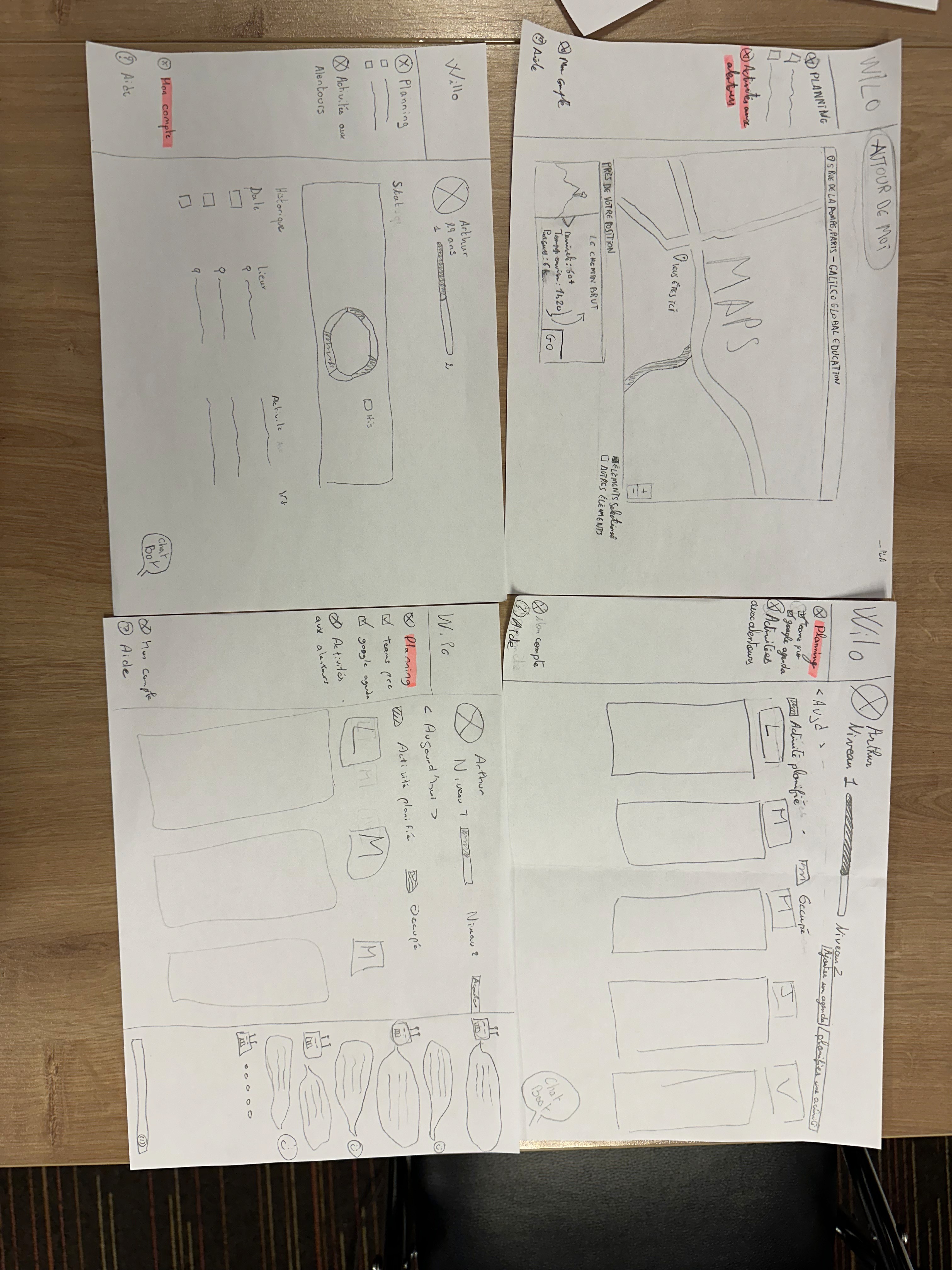
We used techniques like Crazy 8 to quickly generate UI concepts, which we narrowed down through team voting and collaborative sketching. We created a complete user flow early in the process to ensure alignment between design and development.
Minimalist, Adaptive Design
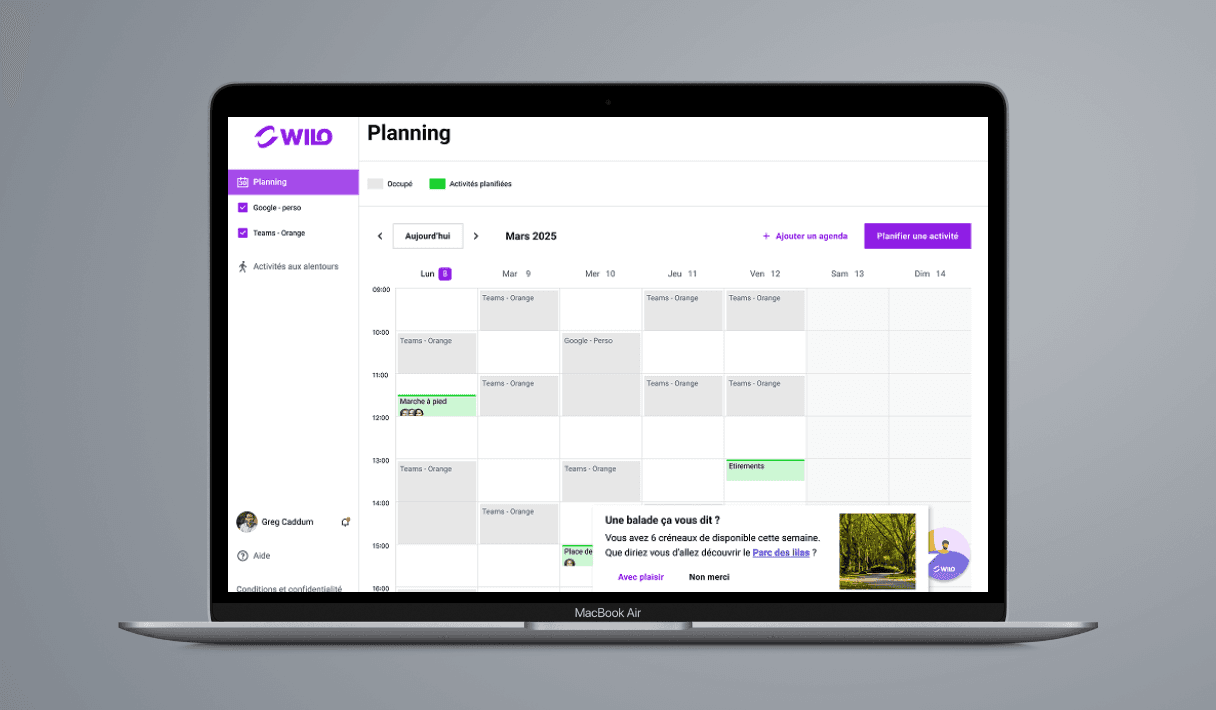
Wilo syncs with the user’s calendar to suggest short, targeted workout sessions, alone or with colleagues.The interface is simple and inviting, featuring :
A chatbot that recommends personalized activities.
A scheduling interface to quickly confirm or decline sessions
A map-based feature showing nearby group activities
Design System & Prototyping
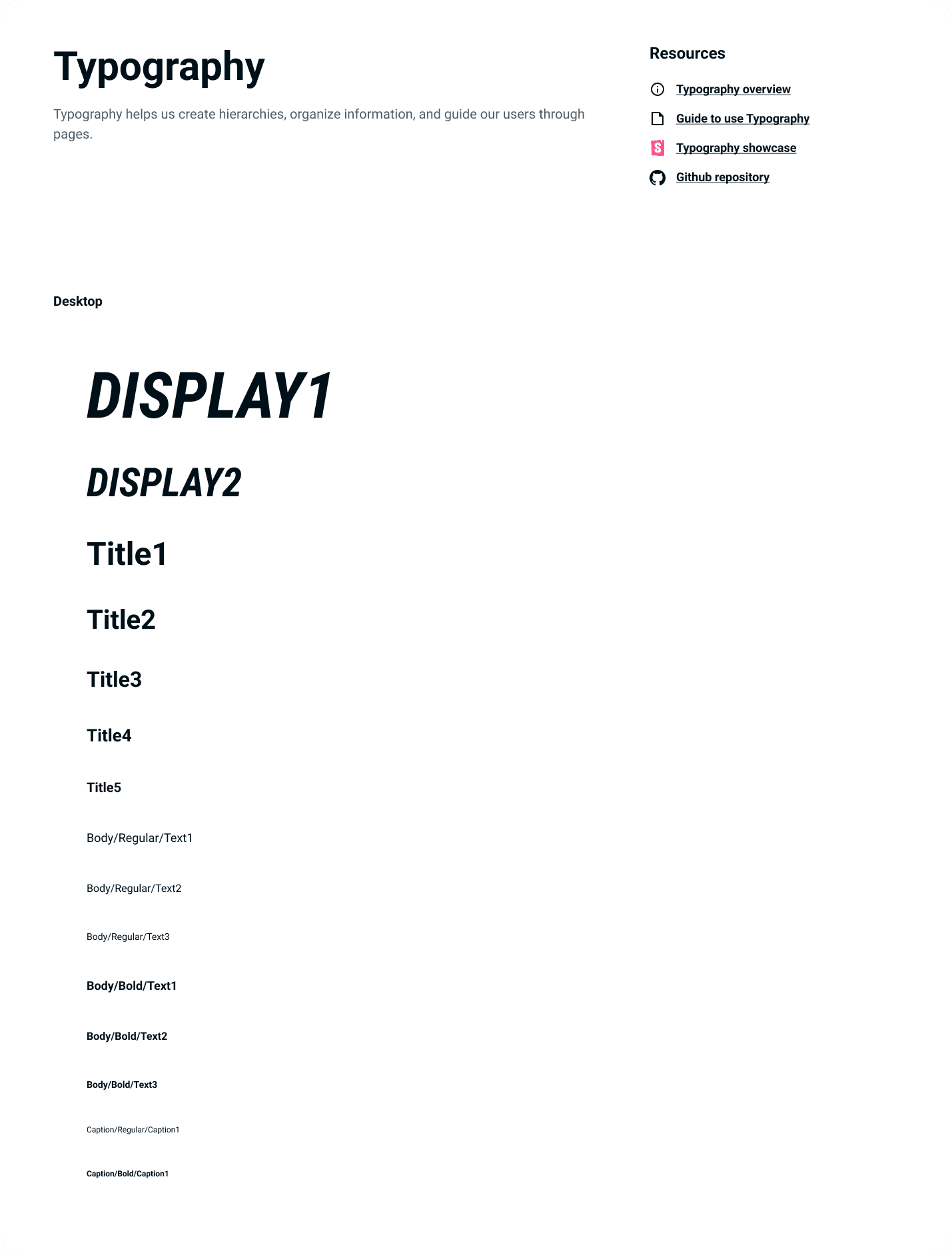
We adapted Decathlon’s official design system for visual consistency while customizing it for our UX goals. I created a high-fidelity desktop prototype that brought our user journey to life and streamlined key interactions.

Result
Increased Engagement : Users responded positively to the calendar-based scheduling and group activity options.
Simplified Access : Automated recommendations reduced the friction typically involved in finding and joining sports activities.
Validated Experience : A 5-second user testing process confirmed clarity, intuitive navigation, and visual appeal.
Tools & Methods Used
F.O.C.U.S.E.D Method : Guided the entire design process with a clear focus on reducing production costs and optimizing product value.
User Interviews : Conducted guerrilla interviews with restaurant servers to gain qualitative insights into their workflow and pain points.
Reverse Brainstorming & Crazy 8 : Encouraged innovative, empathetic thinking.
Customer Journey Mapping & User Flow : Ensured seamless UX from ideation to development.
Design System Integration : Maintained brand identity while tailoring UX.